
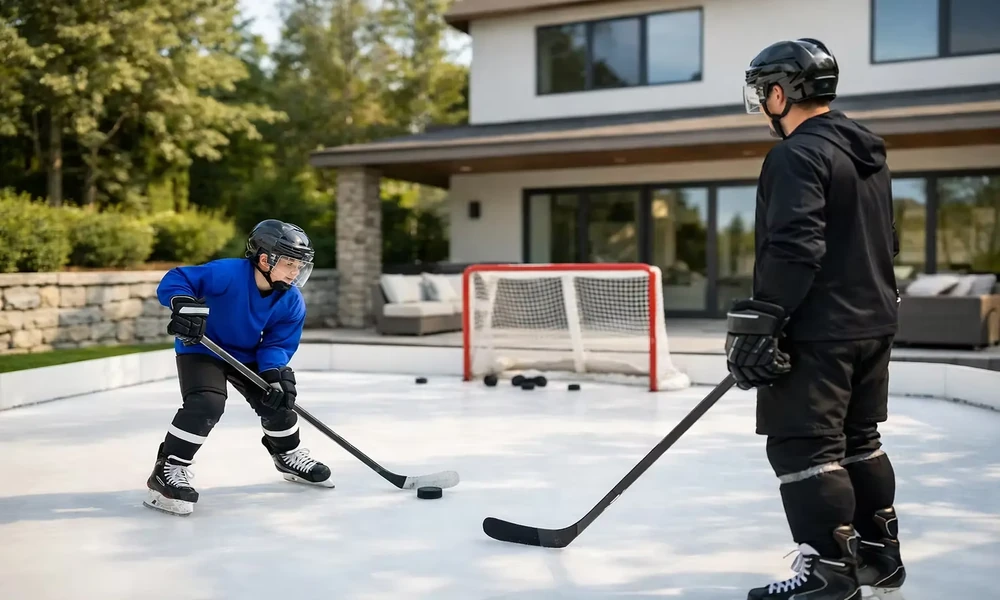

Ice hockey has always been a game of relentless motion, requiring precision, skill, and timing played out on a frozen canvas. For generations, players were forced to chase fleeting ice time during the off-season, forced instead to get creative with their training. Now, synthetic ice surfaces are transforming what it means to prepare for hockey year-round.
The Origins of Off-Season Hockey Training
Early Challenges for Players Without Ice
For decades, the end of winter marked a period of uncertainty for hockey players. Public rinks shut their doors, and frozen ponds melted into memories. Ambitious athletes either traveled hours for rare ice slots or faced the prospect of skills deteriorating over the warmer months.
Traditional Alternatives: Dryland Training and Roller Hockey
With ice scarce, players turned to dryland workouts, agility ladders, resistance bands, and plyometrics, to maintain strength and speed. Roller hockey offered another partial stand-in, bringing the stick and puck into parking lots and gyms. While helpful, neither approach truly replicated the unique glide and edge work that defines real ice hockey.
The Birth of Synthetic Ice Technology
What Is Synthetic Ice?
Synthetic ice is made from advanced polymers engineered to mimic the friction, glide, and response of real ice. The panels interlock to create a smooth, skateable surface, requiring only standard hockey blades, no refrigeration, no water, no Zamboni.
Early Innovations and Limitations
The earliest synthetic surfaces, dating back to the 1960s and 1970s, were functional but flawed. Skating felt sticky, blade wear was excessive, and the experience left many athletes unimpressed. Over time, advances in materials science brought dramatic improvements in glide, durability, and realism.
The Rise of Synthetic Ice Surfaces in Hockey Practice
How Synthetic Ice Mimics Real Ice
Today’s premium synthetic ice panels create a low-friction interface that feels surprisingly close to frozen water. Skaters can accelerate, pivot, and stop with a sensation nearly indistinguishable from natural ice, while stickhandling and shooting skills translate seamlessly.
Adoption by Training Facilities and Clubs
As the technology improved, elite hockey facilities began to install synthetic rinks for off-season training and skills clinics. These surfaces quickly proved their worth, offering athletes a convenient, consistent place to hone their craft without the cost or logistics of year-round refrigeration.
Case Study: West-End Cavendish’s Simulated Indoor Ice Skating Rink
One standout example is the West-End Gym simulated ice skating, where hockey players of all ages can now rent ice time regardless of the weather or season. This state-of-the-art facility provides an authentic skating feel, enabling everyone from beginners to advanced athletes to practice shots, goaltending, and skating skills within a controlled, indoor environment.
Enhancing Skill Development Year-Round
Benefits for Beginners and Youth Players
Synthetic ice opens the door for young players to start learning the game without the intimidation or logistics of a full-sized ice arena. Its accessibility helps coaches focus on fundamentals, balance, stride, puck control, without competing for precious ice slots.
Advanced Training for Competitive Athletes
For serious athletes, synthetic surfaces present a unique advantage: training repetitions skyrocket when ice is always available. Players can drill specific techniques, experiment with skating mechanics, and refine their shot accuracy in a low-pressure setting.
Goaltending and Shooting Practice on Synthetic Ice
Goalies and shooters thrive on repetition. Synthetic rinks let them fine-tune muscle memory and hand-eye coordination, no matter the weather. The ability to simulate real-game scenarios helps develop anticipation and reaction times, bridging the gap between practice and play.
Impact on Hockey Training Culture and Accessibility
Expanding Access to Ice Hockey Training Globally
Synthetic ice has begun to democratize hockey, bringing the sport to regions previously underserved by traditional rinks. From suburban gyms to community centers in warm climates, a new generation of players can now skate and train all year.
Lower Costs and Convenience Compared to Traditional Ice Rinks
Operating a refrigerated rink is expensive and energy intensive. Synthetic surfaces slash overhead costs, reduce maintenance, and eliminate environmental concerns about refrigeration. Rental fees can be more affordable, allowing families and teams to train more frequently without breaking the bank.
Technological Improvements and Future Trends
Advances in Synthetic Ice Materials and Maintenance
Modern synthetic panels require less frequent cleaning or lubrication, and blade wear has been minimized. Improvements in texture and glide keep skaters coming back.
Integration with Virtual and Augmented Reality Training Tools
The next frontier combines synthetic surfaces with virtual reality drills and augmented performance analytics, giving players instant feedback and new ways to measure progress.
Potential for Home and Community-Based Synthetic Rinks
As prices drop and installation becomes easier, it is likely we will see more backyard and community installations. A home synthetic ice pad may soon be as common as a basketball hoop.
Overcoming Skepticism and Common Misconceptions
Addressing Performance Differences Between Synthetic and Real Ice
Skeptics argue that synthetic ice can never fully match natural ice. While there is still a minor difference in glide, most players adapt quickly, finding the slight resistance actually boosts muscle development and technique when they return to real ice.
Testimonials from Coaches and Players
Many coaches now endorse synthetic training as essential for aspiring players, noting faster skill acquisition and improved confidence. Players often report that once back on natural ice, they feel quicker and stronger thanks to off-season reps on synthetic surfaces.
The Future of Off-Season Hockey Practice
Predictions for Synthetic Ice Adoption Rates
As synthetic surfaces become more realistic and affordable, adoption is expected to surge among clubs, schools, and private trainers worldwide.
The Role of Synthetic Ice in Growing the Sport Worldwide
Synthetic ice does not just keep skills sharp during the off-season; it is actively growing the game in new territories, making hockey accessible to more people than ever. The rink of the future might not require freezing temperatures, it simply demands a love for the sport and the desire to keep skating, no matter the season.