
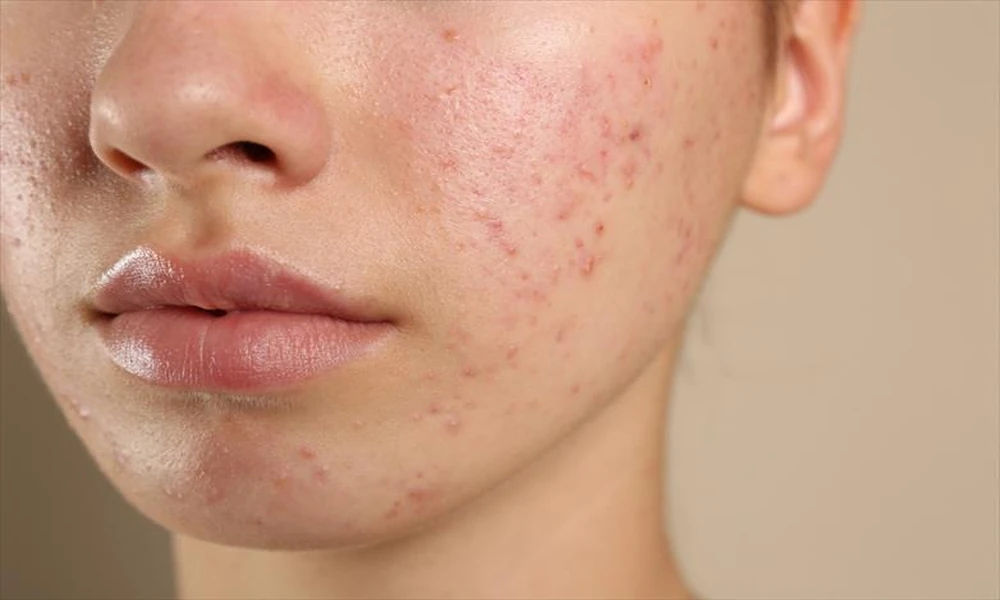

The pimple has gone, but a red or brown spot is still sitting there weeks later. Is it a mark that will fade, or a scar that needs a procedure? That single question decides the whole plan, because the right pimple marks treatment for a flat discoloured spot is very different from what a pitted scar needs. This article explains the difference, what home care genuinely helps, which clinic treatments are used for each type, how long results take and how to stop new marks from forming.
Marks versus scars: a quick test
Run a finger over the spot with your eyes closed.
- If the skin feels completely flat and the problem is only colour, it is a mark. Red or purple marks are post-inflammatory erythema (dilated tiny blood vessels). Brown or black marks are post-inflammatory hyperpigmentation (excess melanin left behind by inflammation).
- If you can feel a dip, a pit or a raised bump, it is a scar. Depressed scars are described as ice-pick (narrow and deep), boxcar (wide with sharp edges) or rolling (shallow waves). Raised scars are hypertrophic or keloid.
Marks fade on their own with time and the right care. Scars involve a change in collagen and do not disappear without treatment. Indian skin tones produce melanin readily, which is why brown marks are the most common complaint and why they last longer than red ones. A clear explanation of how to remove pimple marks versus scars is worth reading before you buy any product.
Home care that helps marks
- Sunscreen every morning, SPF 30 or above with PA+++, reapplied if outdoors. Sun exposure is the single biggest reason brown marks stay for a year instead of three months.
- Niacinamide 4-5 percent serum: calms redness and slows pigment transfer.
- Vitamin C serum in the morning: brightens brown marks over eight to twelve weeks.
- Azelaic acid 10-15 percent: useful for both red and brown marks and safe for most skin types.
- A retinoid at night (adapalene or tretinoin, on a doctor’s advice): speeds cell turnover, fades marks and prevents new pimples.
- Alpha hydroxy acid (glycolic or lactic) two or three nights a week for gentle exfoliation.
Introduce one product at a time and give each at least eight weeks. Do not use everything together; irritation creates new marks.
What does not work
Lemon juice, toothpaste, baking soda, garlic and rubbing with scrubs all irritate the skin and commonly darken the mark. Steroid-containing creams bought over the counter may lighten briefly, then cause thinning and rebound darkening. Picking or squeezing the pimple in the first place is the main reason a mark forms at all.
Clinic treatments for marks
When marks are extensive or have not shifted after three to four months of home care, a dermatologist may add:
- Chemical peels (salicylic, glycolic, mandelic or black peel): four to six sessions, two to four weeks apart. Indicative cost INR 1,500-4,000 per session.
- Q-switched laser toning for brown marks: INR 3,000-8,000 per session.
- Vascular or pulsed-dye laser for stubborn red marks: INR 4,000-10,000 per session.
- Prescription creams combining a retinoid, a brightening agent and sometimes a short course of a stronger agent under supervision.
Clinic treatments for scars
Scars need treatments that remodel collagen rather than lighten colour.
| Scar type | Common treatments |
|---|---|
| Rolling | Microneedling, radiofrequency microneedling, subcision |
| Boxcar | Fractional laser resurfacing, TCA peel, microneedling |
| Ice-pick | TCA CROSS, punch techniques |
| Raised or keloid | Steroid injections, silicone gel, pressure |
Microneedling is often the first step for rolling and boxcar scars because it works on most skin tones with a low risk of darkening. Fractional lasers such as erbium or CO2 give stronger remodelling but need more downtime and careful priming on Indian skin. Most people need three to six sessions, four to six weeks apart. Indicative prices: microneedling INR 3,000-8,000 per session, radiofrequency microneedling INR 8,000-20,000, fractional laser INR 6,000-15,000. All figures are approximate, vary by city and clinic, and the exact price will be given by the treating doctor after examining the scars. Reading about the different types of acne scars beforehand makes that consultation more productive.
Realistic timelines
- Red marks: six weeks to six months; faster with azelaic acid and strict sun protection.
- Brown marks: three to twelve months with skincare; peels or laser can shorten this.
- Scars: visible improvement after two or three sessions; the full course is usually spread over six to nine months, and improvement continues for months after the last session as collagen matures.
Take photographs in the same light every month. Day-to-day comparison in the mirror is discouraging and unreliable.
Prevention: the part most people skip
Treating marks while new pimples keep forming is like mopping with the tap open. Active acne must be controlled first, with a cleanser, a retinoid or benzoyl peroxide, and oral medicines if the dermatologist advises. Avoid heavy, oil-based creams and hair oils dripping onto the forehead, change pillow covers often, and keep hands off the face. Once breakouts stop, the marks you treat stay gone.
When to see a doctor sooner
See a dermatologist without waiting if you have painful, deep nodules or cysts, if acne appeared suddenly with irregular periods or hair growth, if a scar is growing or itching (possible keloid), or if a mark is changing shape or colour. Early control of severe acne is the most effective pimple marks treatment there is, because it prevents the marks from forming at all.
Disclaimer: This article is for general information only and is not a substitute for medical advice. Please consult a qualified dermatologist before starting any acne, mark or scar treatment.